Jormungandr
World-encircling serpent and archenemy of Thor.

Jörmungandr, also known as the Midgard Serpent or World Serpent, is a monstrous sea serpent in Norse mythology who dwells in the world sea, encircling the Earth (Midgard) and biting his own tail, forming an ouroboros. He is the middle child of the god Loki and the jötunn Angrboða, and is regarded as the archenemy of the thunder god Thor. Jörmungandr releasing his tail is one of the signs of the beginning of Ragnarök.
- also_known_as
- Midgard Serpent, World Serpent
- mythological_parents
- Loki and Angrboða
- siblings
- Fenrir and Hel
- field
- Norse mythology
- known_for
- Encircling Midgard, battling Thor at Ragnarök
- role
- Sign of Ragnarök, archenemy of Thor
Lore & Background
According to the Prose Edda, Odin took Loki's three children by Angrboða—the wolf Fenrir, underworld ruler Hel, and the serpent Jörmungandr—and removed them from Asgard. Jörmungandr was tossed into the great ocean that encircles Midgard, where he grew so large that he could surround the Earth and grasp his own tail. The name Jǫrmungandr is a poetic title consisting of the prefix jǫrmun- (denoting something huge, vast, or superhuman) and the suffix gandr (referring to elongated entities or supernatural beings, such as snake, river, staff, or bind).
Reader's Guide
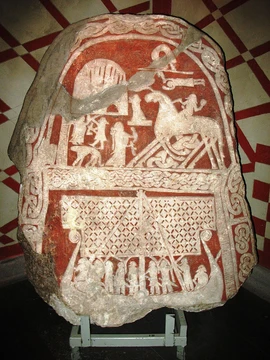
Jörmungandr's significance in Norse mythology is profound, as he embodies the cosmic boundary of Midgard and the cycle of life through his ouroboros form. His release of his tail signals the onset of Ragnarök, the end of the world. Thor's lengthy feud with the serpent culminates in their mutual deaths during Ragnarök: Thor kills Jörmungandr but falls dead after nine paces from the serpent's venom. Three preserved myths detail their encounters: Thor lifting the serpent disguised as a cat, Thor's fishing trip where the serpent bites a baited ox head, and the final battle at Ragnarök. The fishing motif is one of the most popular in Norse art, depicted on stones such as the Altuna Runestone and the Hørdum stone. Analysis draws parallels between Thor and the Hindu god Indra slaying the dragon Vritra, and to a Balto-Slavic storm-god combatting a serpent. Jörmungandr also appears in modern popular culture, including the television show Vikings and the video games God of War and For Honor.
Did You Know?
- Jörmungandr is the middle child of Loki and the jötunn Angrboða, with siblings Fenrir and Hel.
- The name Jǫrmungandr can mean 'world serpent,' 'world river,' 'world staff,' or 'world bind.'
- Thor's fishing for Jörmungandr is depicted on several ancient picture stones, including the Altuna Runestone and the Hørdum stone.
Common Misconceptions (Editorial)
One common misconception is that Jörmungandr is Loki’s only monstrous child, but according to the facts on record, he is the middle child, with siblings Fenrir and Hel. Another is that the name “Jörmungandr” solely means “world serpent,” but the facts show it can also mean “world river,” “world staff,” or “world bind,” due to the suffix *gandr* referring to elongated entities or supernatural beings, not just snakes.
Why It Matters (Editorial)
Jörmungandr endures as a symbol of inescapable cycles and inevitable destruction, embodying the Norse sense of a fate that binds even the gods. His eternal role as Thor’s archenemy and his release as a sign of Ragnarök connect ancient storytelling to modern fascination with apocalypse and the limits of order.
Spotted an error? Know more?
This is a living reference — every entry is fact-audited, and reader corrections feed straight into our audit queue. Suggest an edit · See this site's audit record